[wpgmza id="1"]
Departure from Sofia
At 10:00 in the morning, on the 16th of June 2025, we left our apartment in Sofia for the last time. It was a bit of a hectic morning -- we were still bringing boxes down to our car when the landlord's assistant arrived. Everything went well though -- we managed to hand over the key and move our last boxes into our storage unit.
From this moment onward we were officially homeless.
Next to being homeless, we were also jobless, but rest assured: we were not directionless. We had bought a car (Honda CRV 2006) and set our minds on discovering the Bulgarian countryside that we had largely ignored while living in the country's capital.
That's how we found ourselves in our Honda full of camping gear, on our way to our first destination:
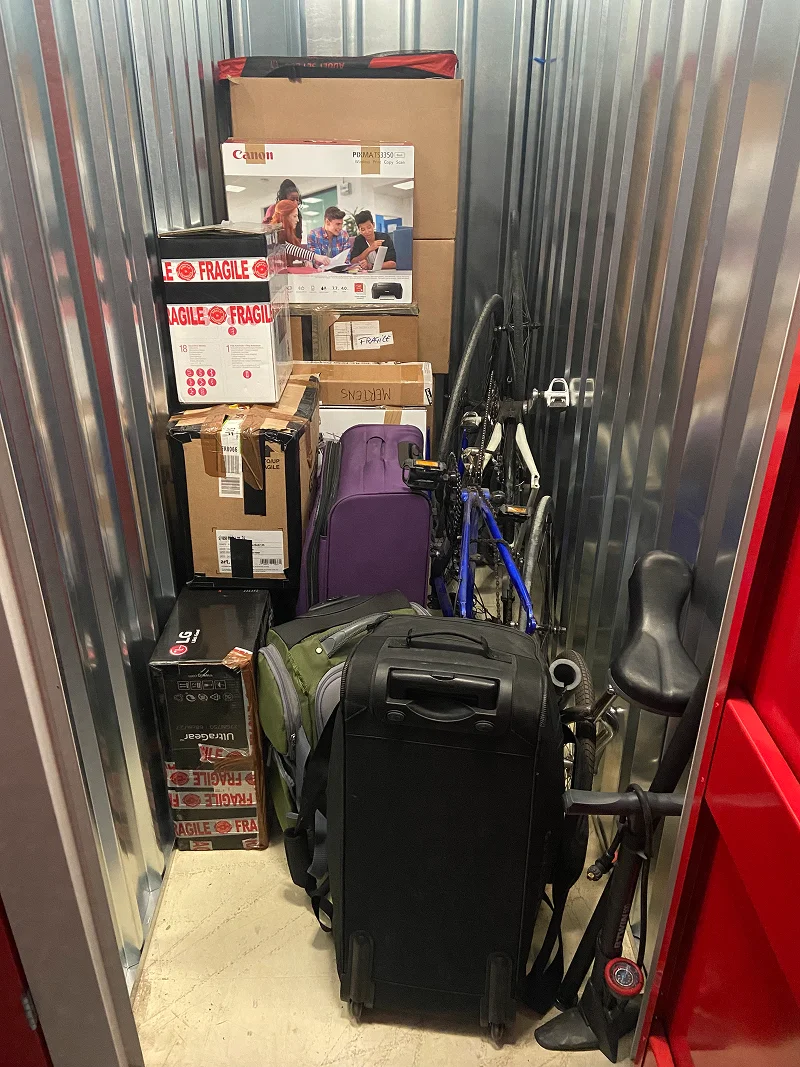
All our stuff, tucked away in the storage unit.
Blue Gate Camping
Because our departure from Sofia was a bit hectic, and we had not gotten around to testing all of our gear yet. So we decided that it would be best to not head into wild camping straight away. Instead we opted for a campsite with high reviews, just outside of Sofia (1h drive).
At this campsite, we reorganised our car and tested some of the new gear we purchased. Still we didn't get around to finishing our DIY window covers, nor did we manage to install our dashcam. We saved that for our next stop: Belogradchik.
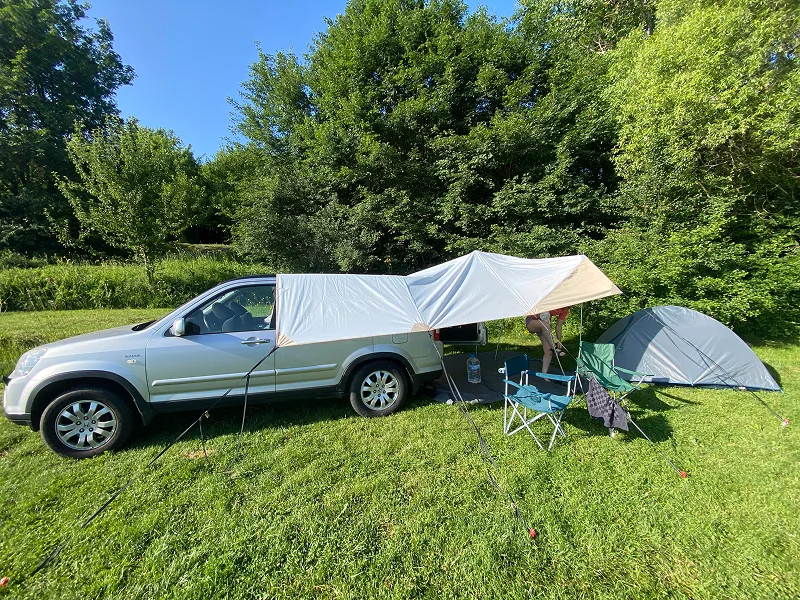
Our first setup - testing out our huge tarp
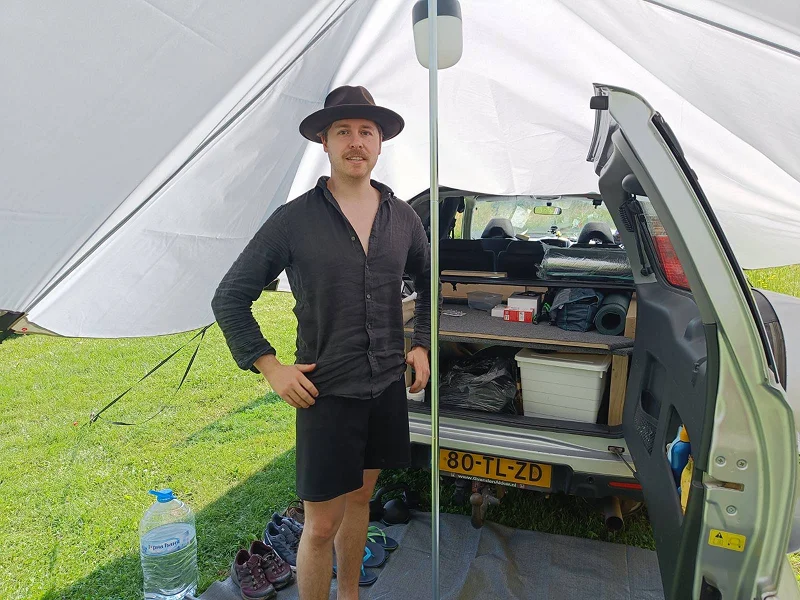
A look inside of our car/organisation system. Still a bit messy. Nice new hat though.
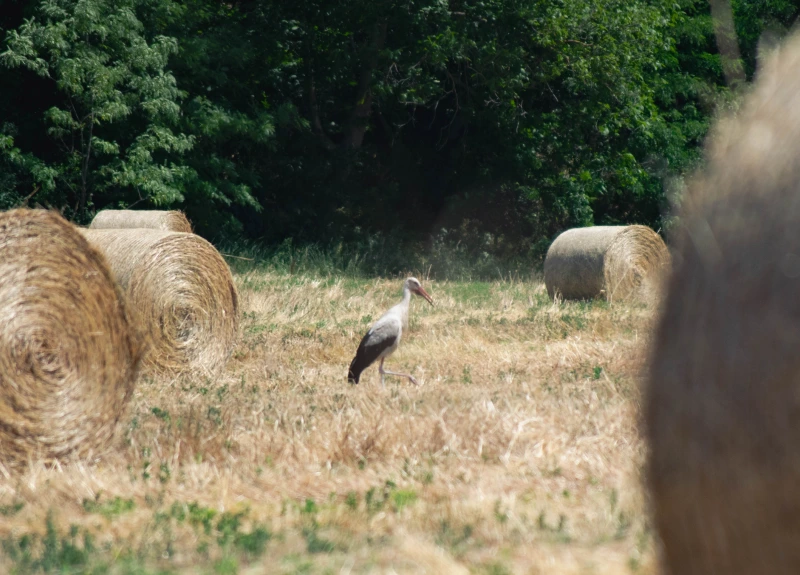
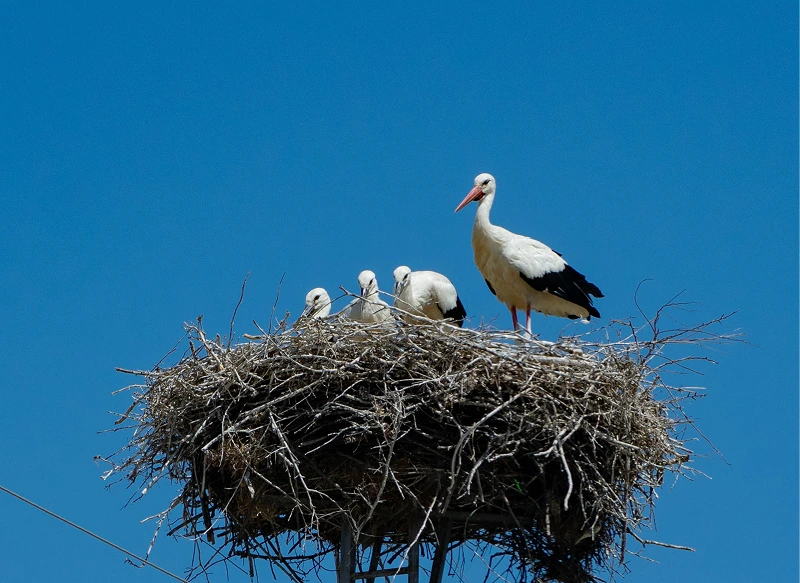
On route we spotted many storks, which I thought was very exiting. I've started an archival page on this website where I'll try to collect all the birds I manage to snap.
Belogradchik
On our way to the famous Belogradchik fortress, we stopped at the Han Madonna Inn. They had a field where we could set up camp. At this campsite we tested some different configurations of the tarp and we installed the dashcam (front and back camera).
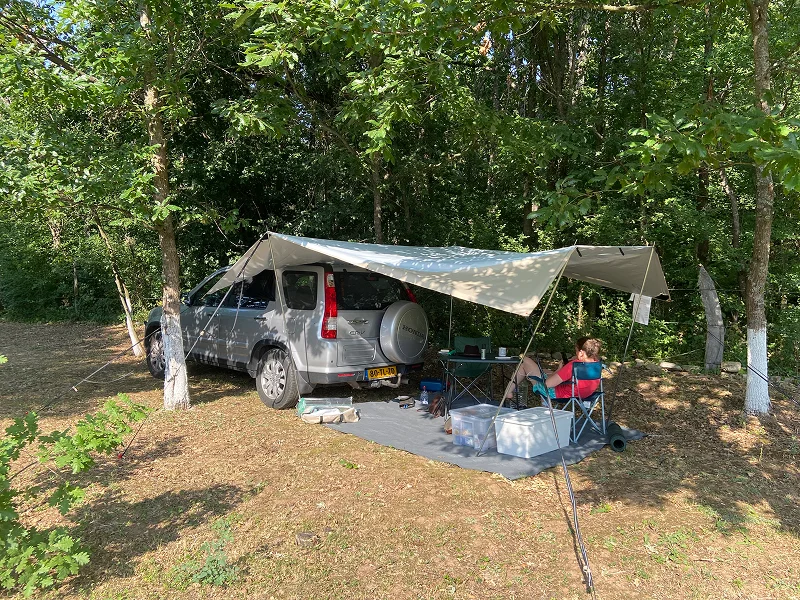
New tarp setup
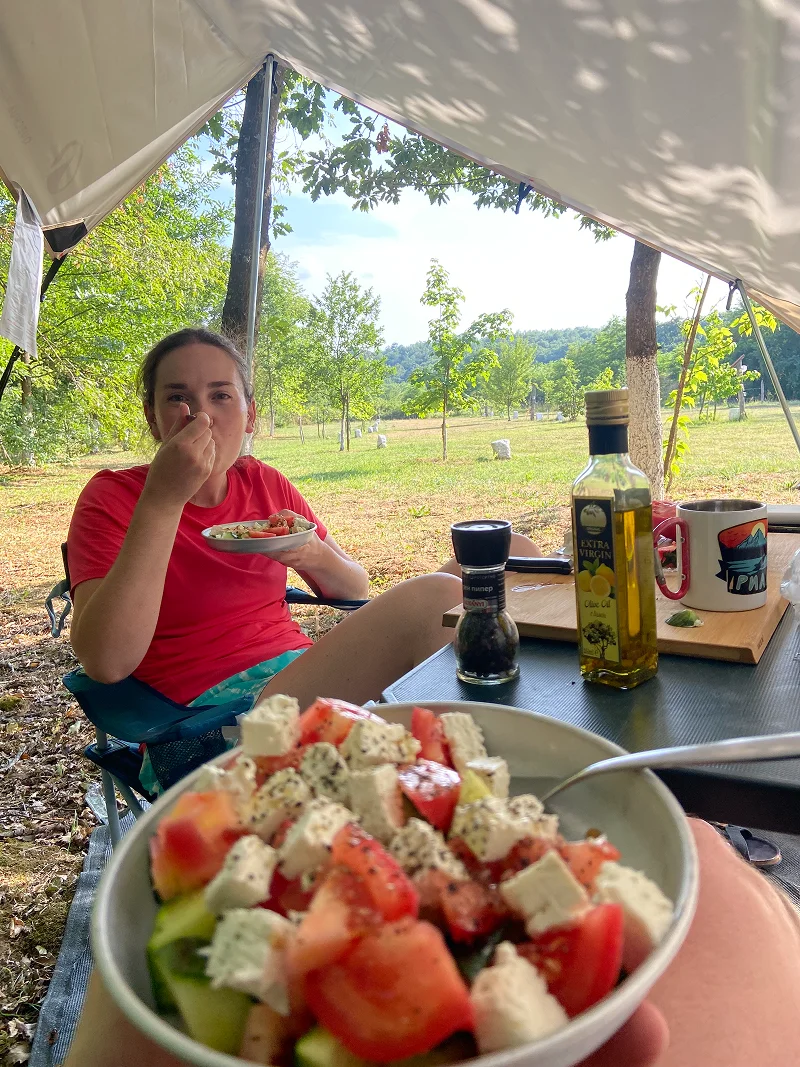
Lovely shopska salad at the campsite (Bulgaria's national salad for marketing reasons)
In Belogradchik, we explored the fortress and the surrounding rock formations and caves. Despite the heat, we had a great time. We asked a friendly tour guide at the fortress for good wild camping spots and she promptly told us that we can simply park next to the fortress. There was running water and some portaloos. And the best thing about camping so close to the fortress? We could sneak up one of the ancient watch towers and watch the stars at night. The guide told us it was one of the best local spots for stargazing. High up there, far away from the lights of the town.
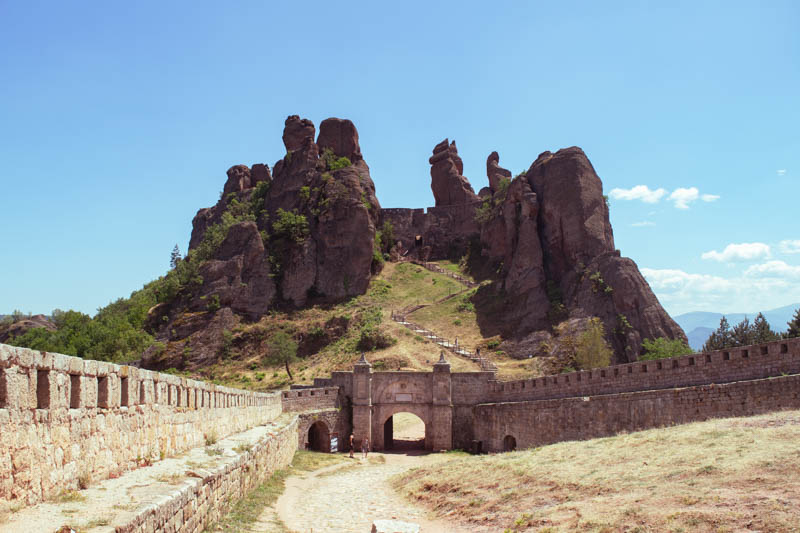
The gate to the impressive Belogradchik fortress
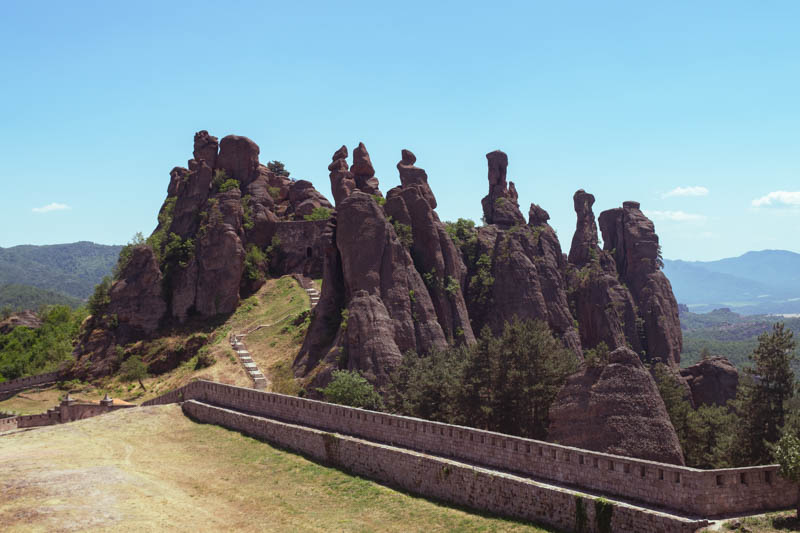
Belogradchik fortress
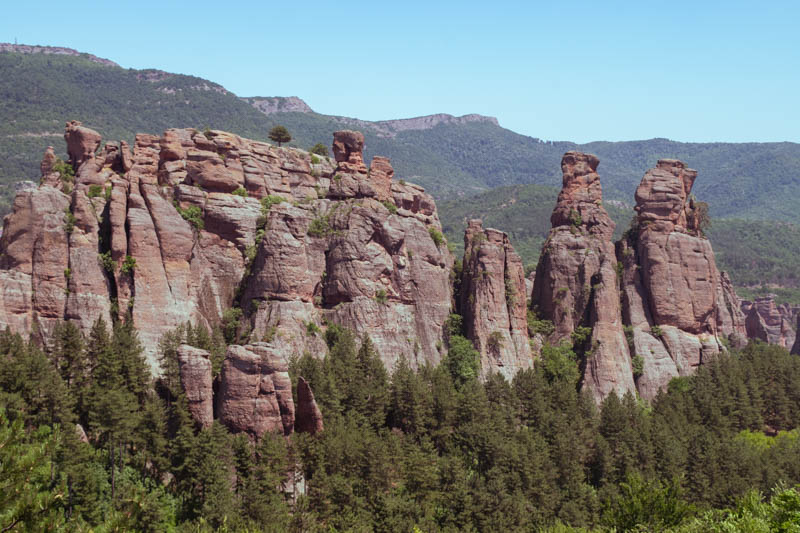
Interesting rock formations. Each have their own legend. Some are women, some or knights, or monks. All have been turned into rocks.
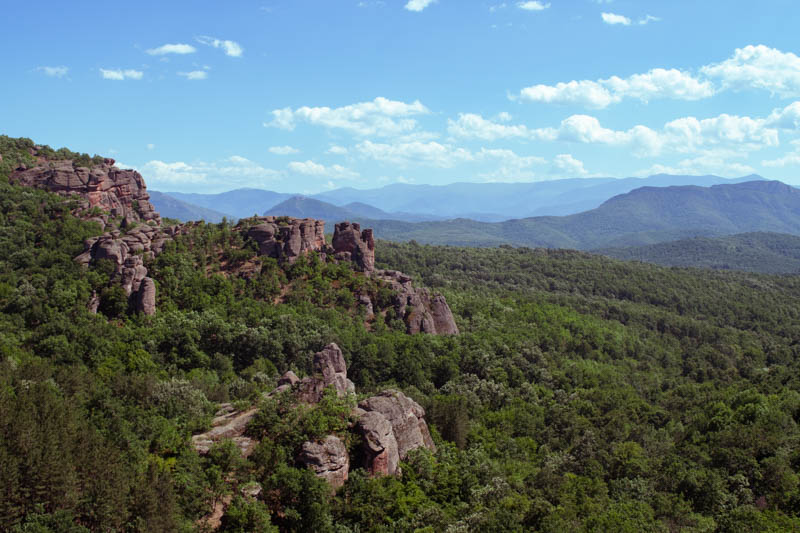
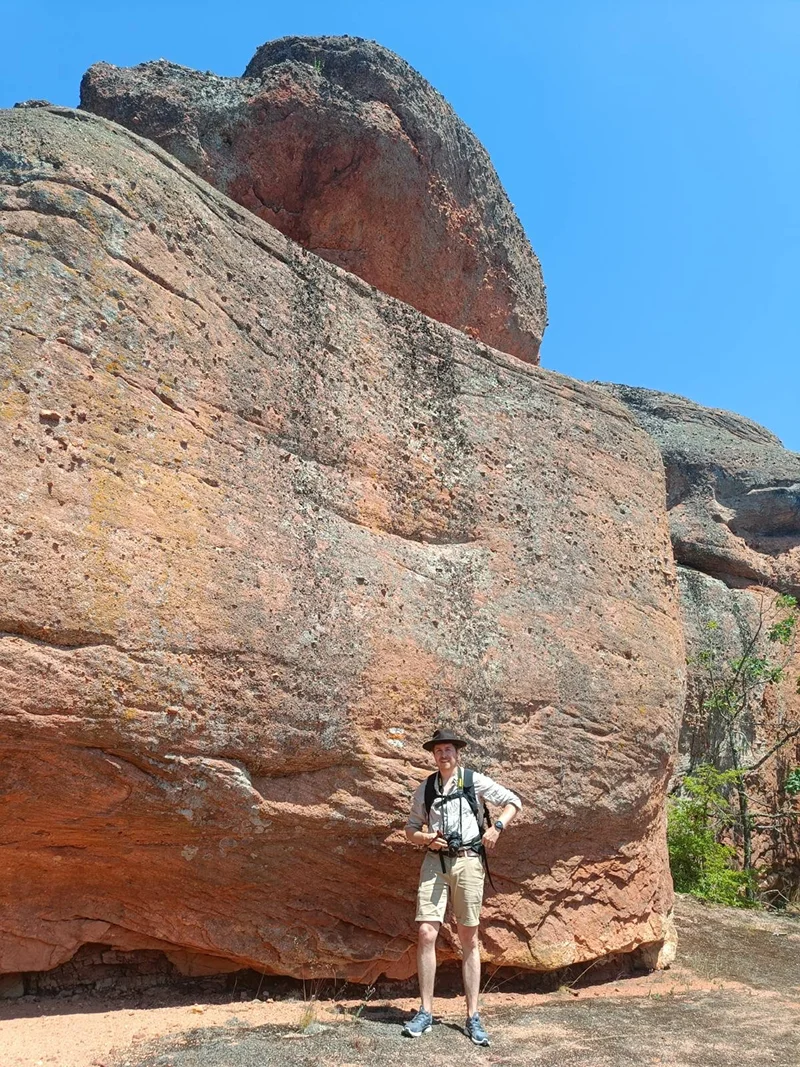
On our hike to the Lepenitsa cave, where we filmed the outro to my Youtube video about my DIY backpack
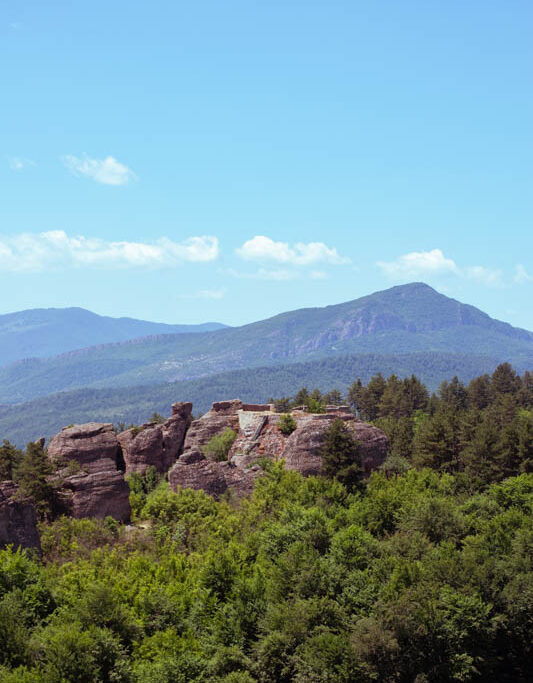
A picture of the ancient watch tower during day time. If you look closely, you can spot the black stairs in the center of the image. We did some excellent stargazing there.
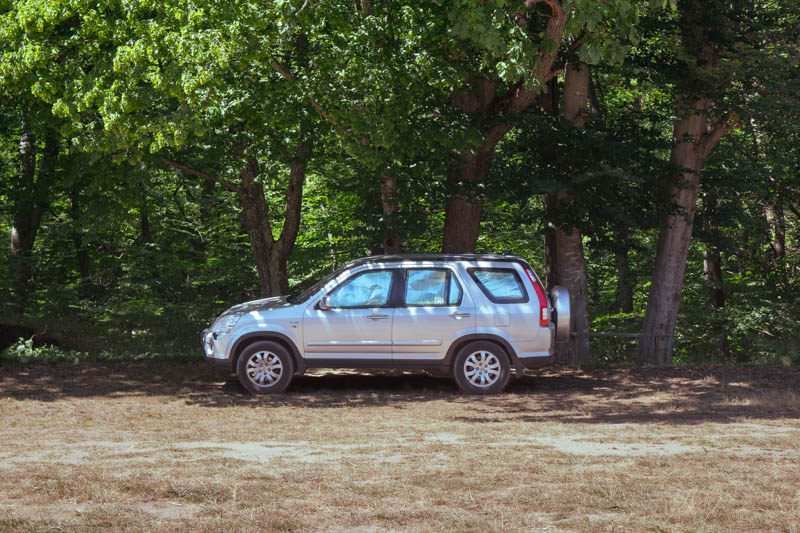
In the afternoon we finished making our window blinds. Here they are photographed with the reflective side outward, to keep out the heat.
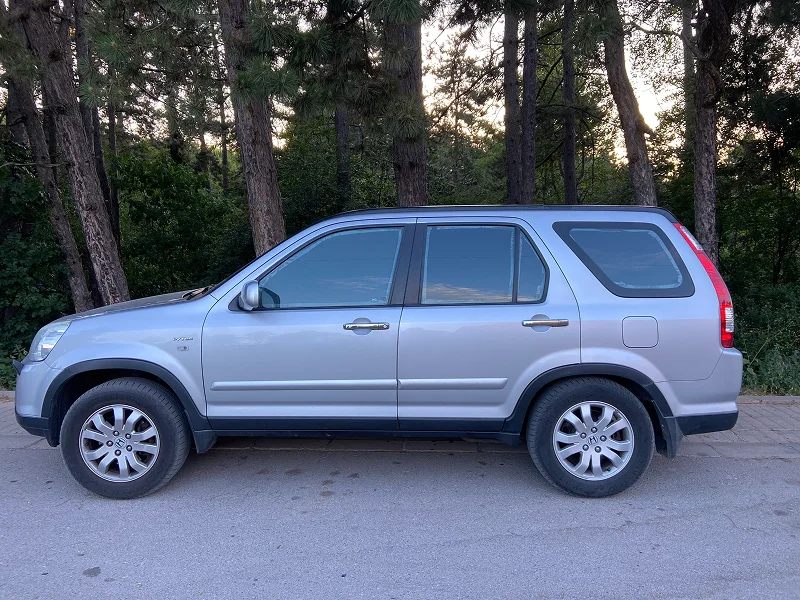
Here the window blinds are turned around (black, stealth mode). Good for during the night, when you don't want draw attention to the car.
After Belogradchik we drove a bit further North, to the Magura cave. Here we took at 2.5h guided tour in Bulgarian, which was challenging to say the least. We managed to understand a handful of words like:
-
'двадесет и пет километра' -> 'twenty five kilometer' (the length of the cave system)
-
'петнадесет милиона години' -> 'fifteen million years' (the age of the cave system)
-
'хора живеят тук' -> 'people live here'
So just imagine us shuffling through an underground cave system in a herd of 30 Bulgarians, following the soft hum of a uninspired, middle-age, Bulgarian tour guide. Yeah, it was pretty boring.
It was also just a cave, you know? Once you've seen one, you've seen them all.
Vratsa & God's Caves
So after that boring experience in the Magura cave, we decided that it was time to visit MORE CAVES!
But before that we had to set up camp in the mountains close to Vratsa. A lovely campsite with very good amenities, and it cost us only €7,50 per night. Since we managed to save so much on accommodation, we decided to treat ourselves to a lovely mekitsi breakfast (Bulgarian deep fried batter with jam and white cheese as topping).
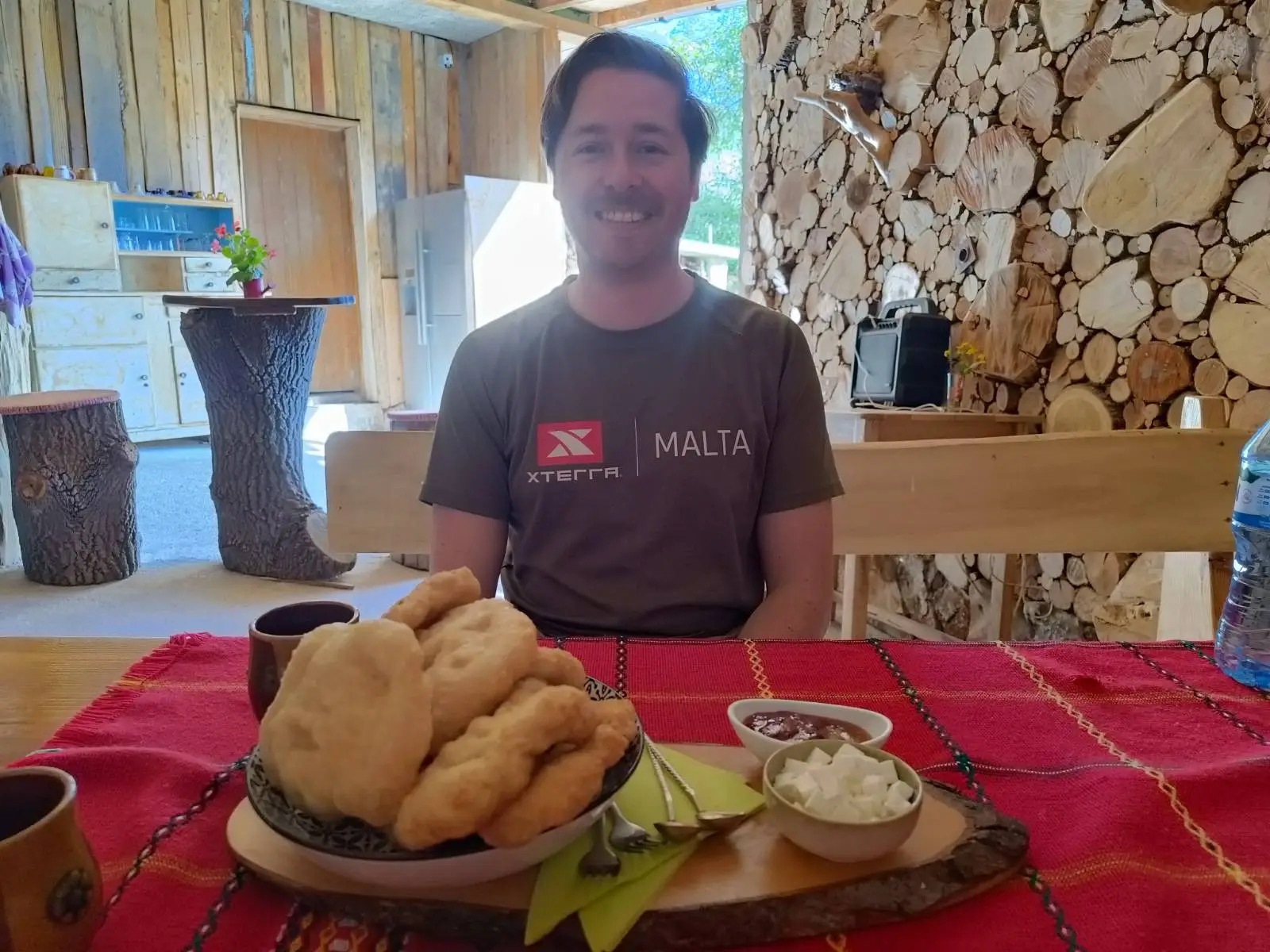
Very happy with our mekitsi breakfast
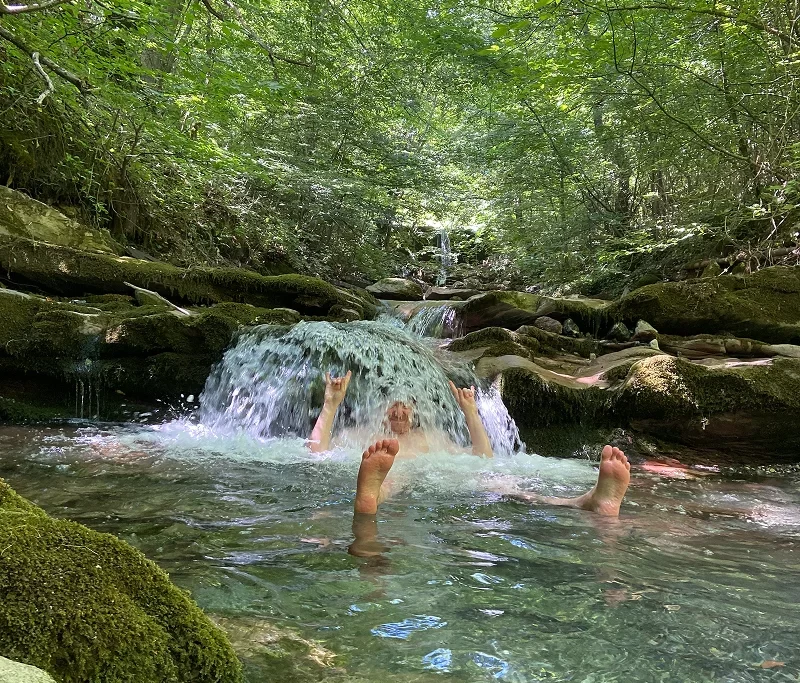
Couldn't leave Vratsa before a dip in the ice cold mountain stream -- rock on!
God's Bridge
15 minutes from Vratsa is the impressive Божият мост (God's Bridge). A massive underground structure that indeed resembles a bridge. Apart from a rich lady with her son that stayed there for a grand total of 5 minutes to take their desired instagram picture, we had the cave to ourselves. We had a lot of fun running around, exploring all the smaller caves, and enjoying the orchestra of frogs and their echos.
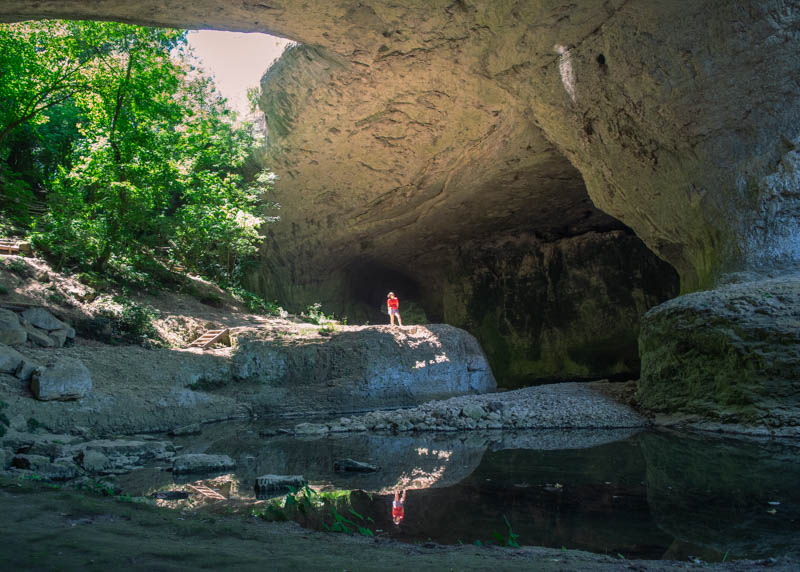
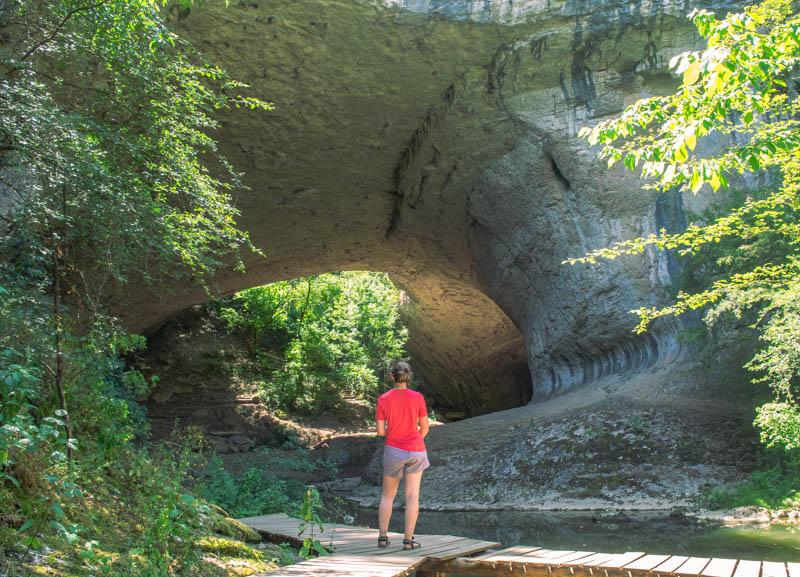
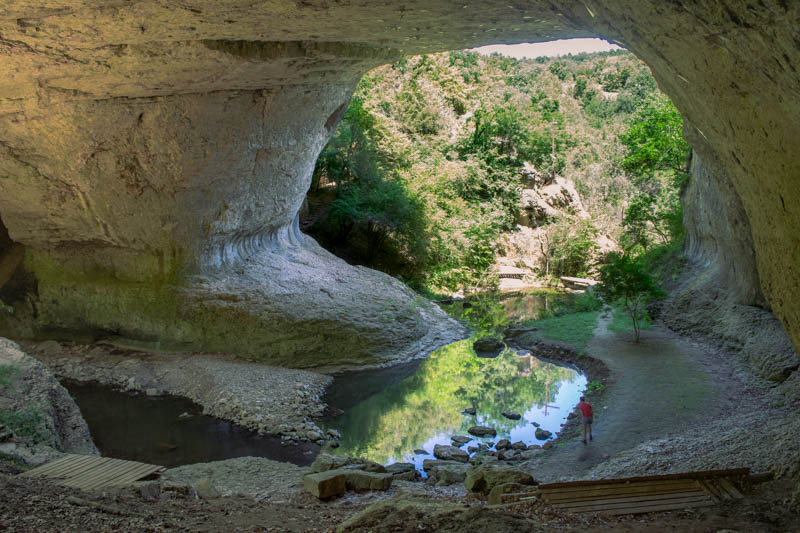
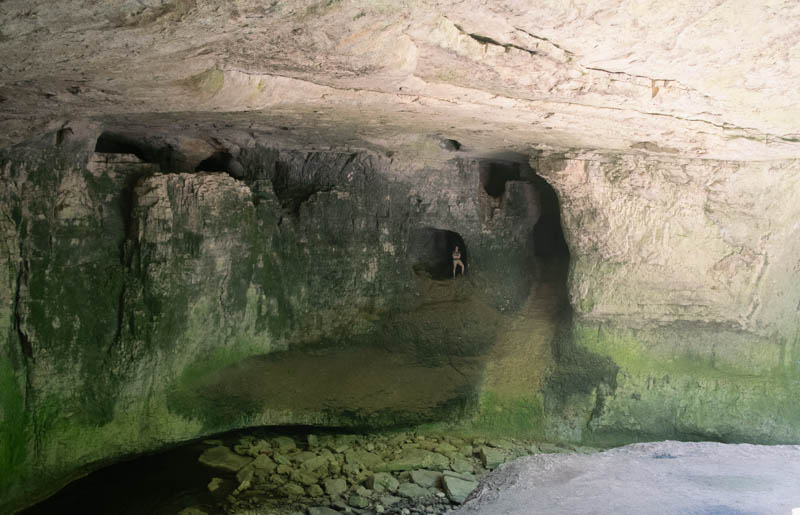
Very cool Jaer... yes, very cool
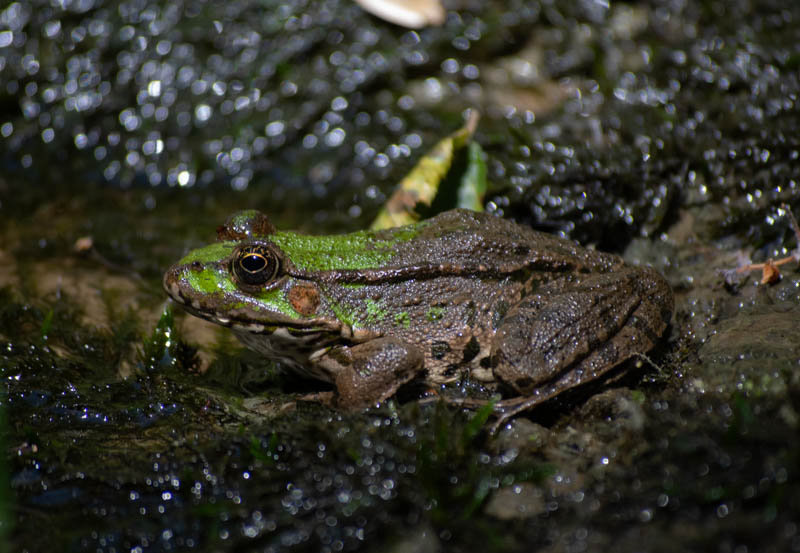
Beautiful singing (and laughing?) frogs
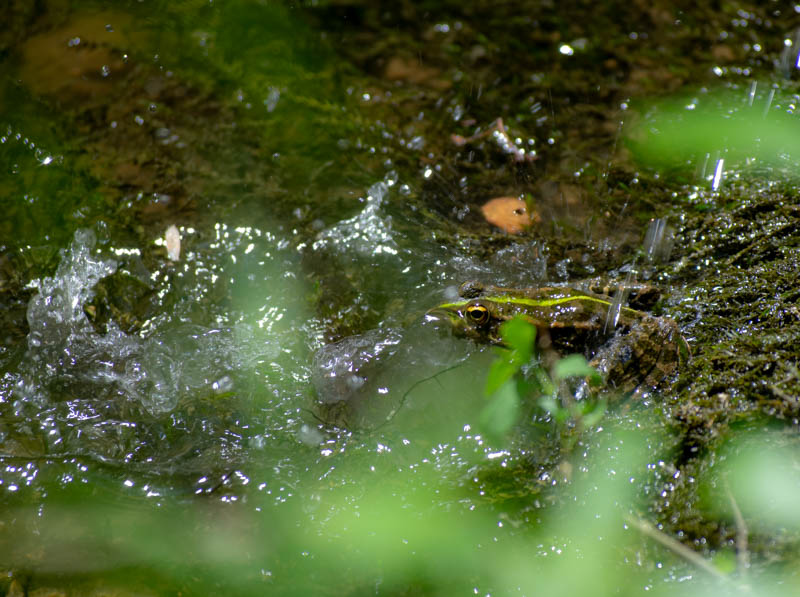
'Me, when she asks me to come over'
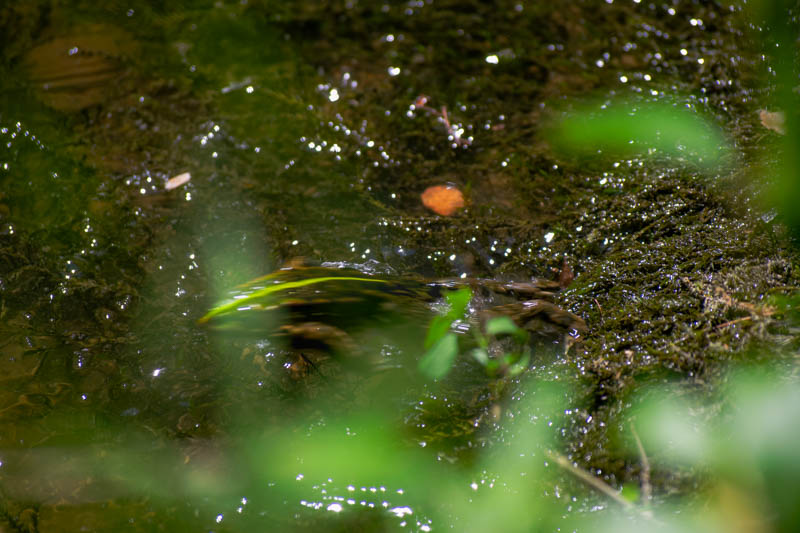
'Me, when she asks me to come over and her parents are not home'
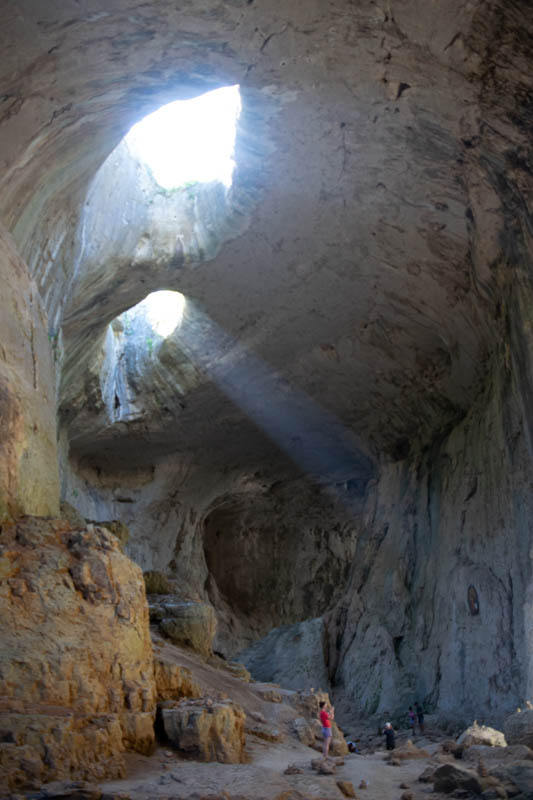
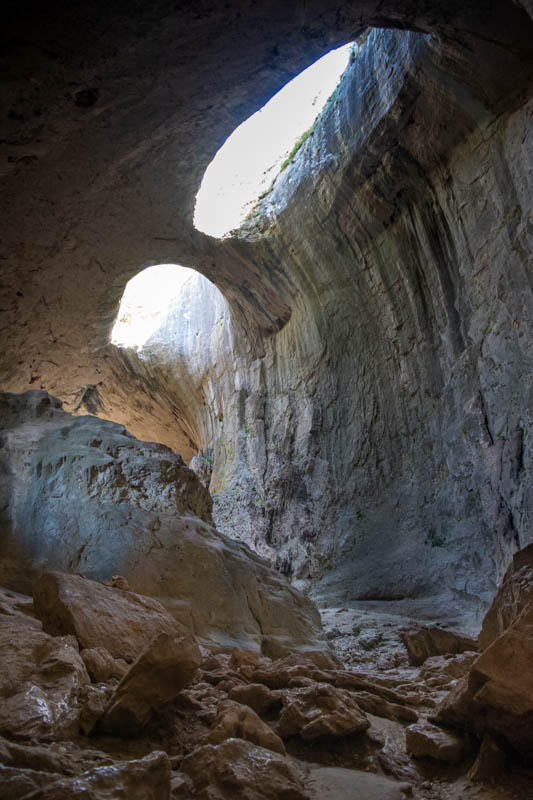
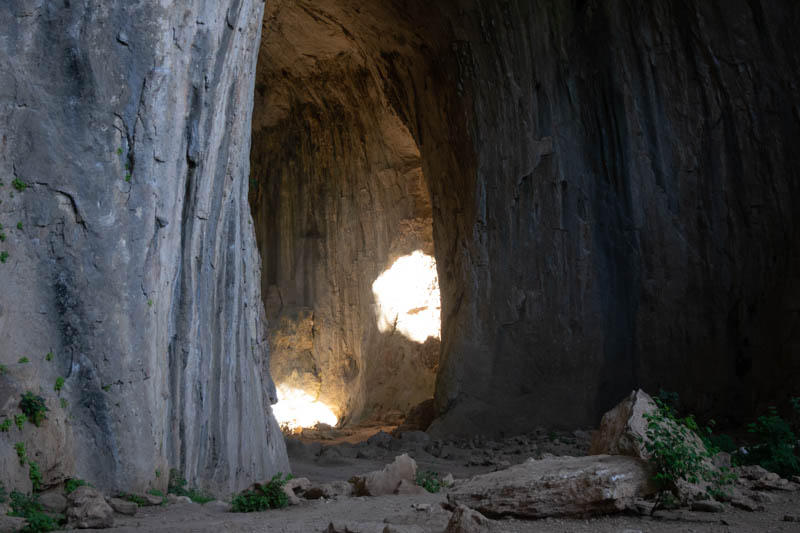
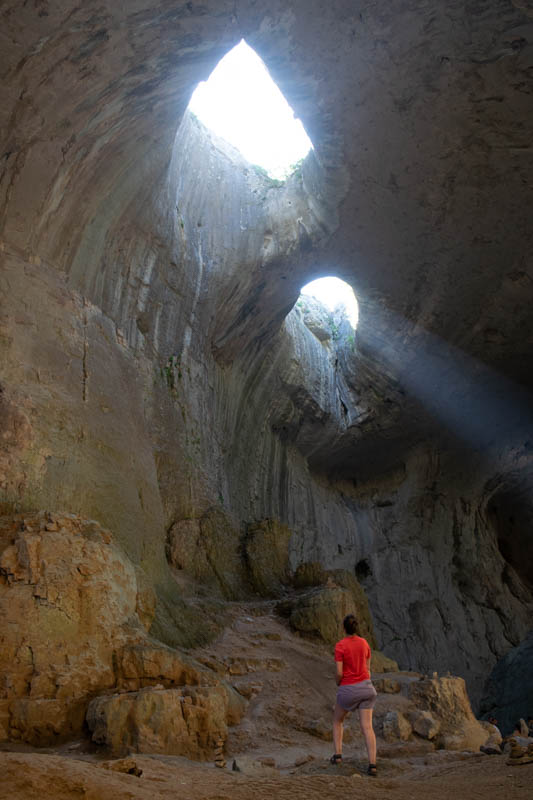
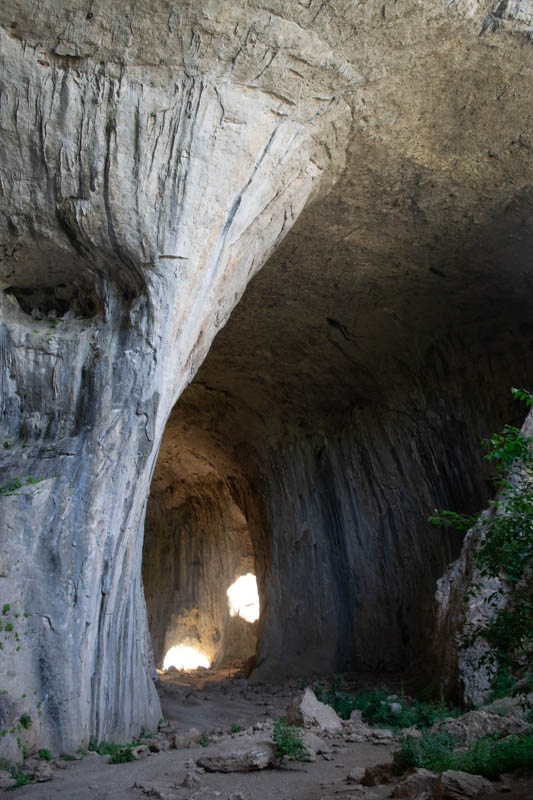
God's Eyes
A bit further towards central Bulgaria, there was another cool cave we wanted to visit. The so called 'божиите очи', or 'God's Eyes'. Very cool cave, but we'll remember it less fondly because there were more tourists here. Most intrusively were the souvenir sellers at the start of the cave. Some of them sold fruit bowls of which most tourists seemed to dump the forks and bowls elsewhere in the cave. Very disappointing.
Whilst driving to our next stop, we had to fuel up for the first time. In Bulgaria the fuel station employees will always help you out, something that I don't really understand because it's not a lot of effort to stick the fuel nozzle in the car yourself. But it also offers a nice opportunity to chat with some of the locals. They usually don't speak English, but they know the words 'benzine' and 'full'. They usually speak a bit of German, which is helpful. But I mostly enjoy practicing my Bulgarian with them.
Whilst Becky was cleaning the exorbitant amount of insects of our windscreen, I was trying my best to hold up a conversation.
-
Fuel pump assistant: 'Benzine?'
-
Me: 'да, да.' (Yes, yes)
-
Fuel pump assistant: 'Full?'
-
Me: 'да, да.' (Yes, yes)
-
Me: 'Какво е „Full“ на български?' (What is „Full“ in Bulgarian?)
-
Fuel pump assistant: *Laughing* 'до ръба!' (to the rim!)
-
Me: 'до ръба?' (to the rim?)
-
Fuel pump assistant: 'да' (Yes)
.... few minutes of silence and both trying not to catch each other's eye...
-
Me, pointing at the sun: 'топло!' (warm!)
-
Fuel pump assistant: 'да' *laughing*
.... we walk inside his little office to pay...
.... the AC is running overtime here, very cold...
-
Me: 'студено!' *laughing* (cold!)
-
Fuel pump assistant: 'да' *laughing*
Yes... as you can see... the languages courses have really paid off... :)
Etar & Veliko Tarnovo
We continued to drive until we reached Etar village, as we were planning to visit the ethnographic village there the next day. We set up our stealth camping mode right next to the Sokolski monastary on the top of a hill. A very cool experience, which allowed us to visit the monastary the next morning before setting off to the ethnographic museum.
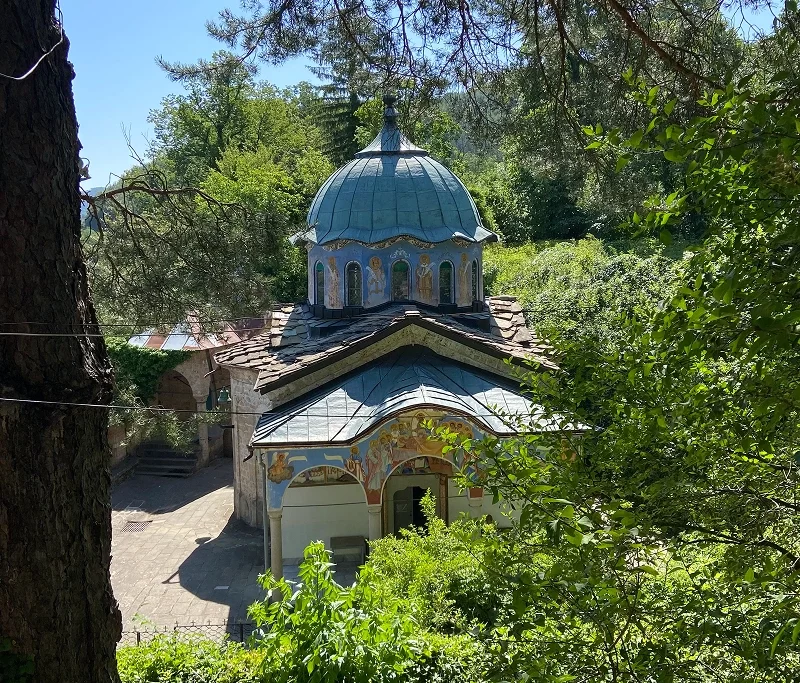
The chapel of the Sokolski monastary - a great morning view
I had high hopes for the Etar ethnographic village, but it ended up being quite disappointing. They recreated an old time Bulgarian village, which was cool. But what disappointed me was that most of the craft houses were filled with cheap mass produced products instead of authentic handcrafted objects. I expected people to cosplay and show what the life was like in those times. Instead, we got a bit of a dull village without much interactivity. Still we enjoyed some interesting highlights like the antique nut roaster, the fruit smoker, and the dairy hut. These were very specific regional crafts that I had not learned much about before.
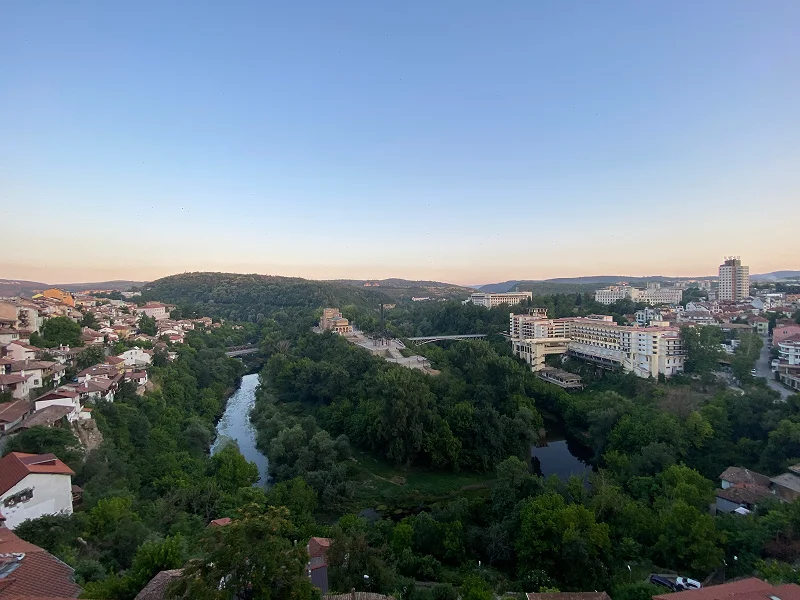
View of Veliko Tarnovo
After the ethnographic museum we made our way to Veliko Tarnovo. This is the former capital of Bulgaria and it sits on the top of a meandering riverbed. This creates a very interesting urban footprint. What struck me most was the lack of a central city square. Later, we found the old fortress of the city on the other end of town and then the urban map started to make more sense to me.
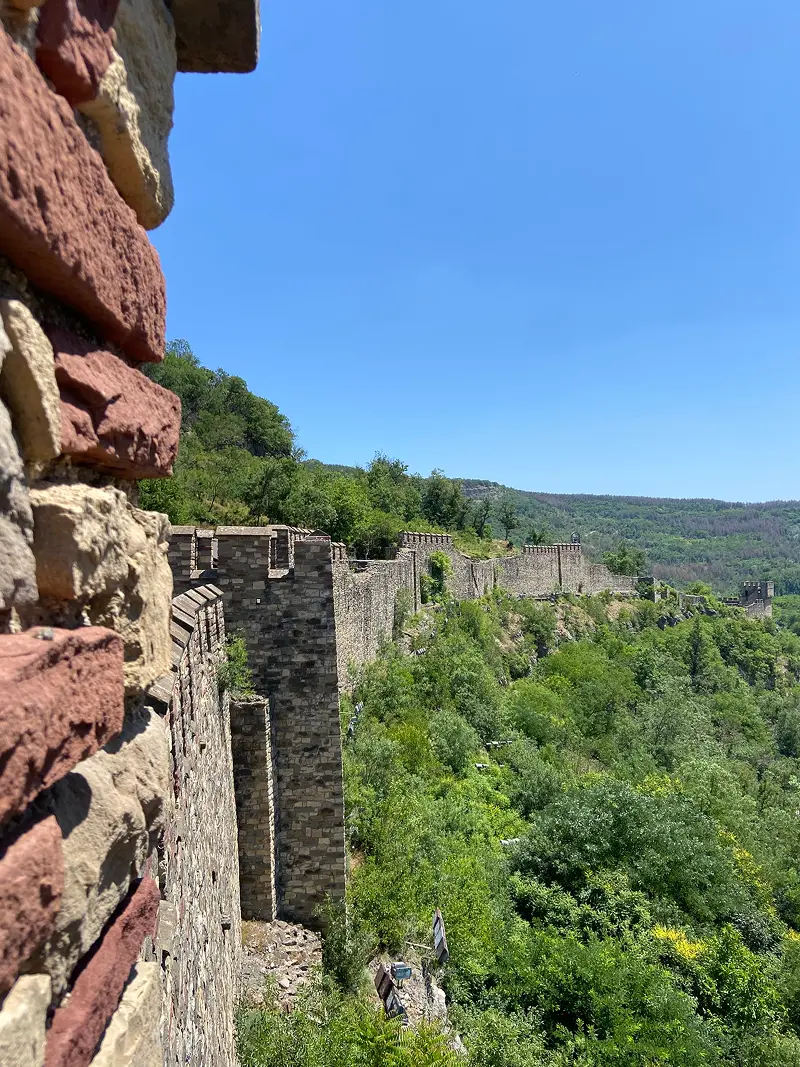
Wall of the fortress, built on top of the hill, in-between two river-sides. Very good location!
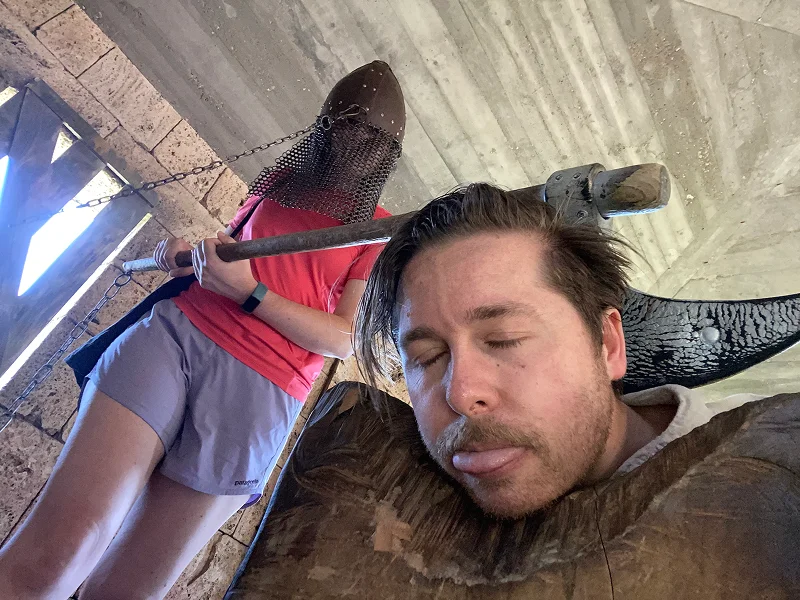
Cosplaying a bloody dungeon in the fortress of Veliko Tarnovo
Varna & Black Sea
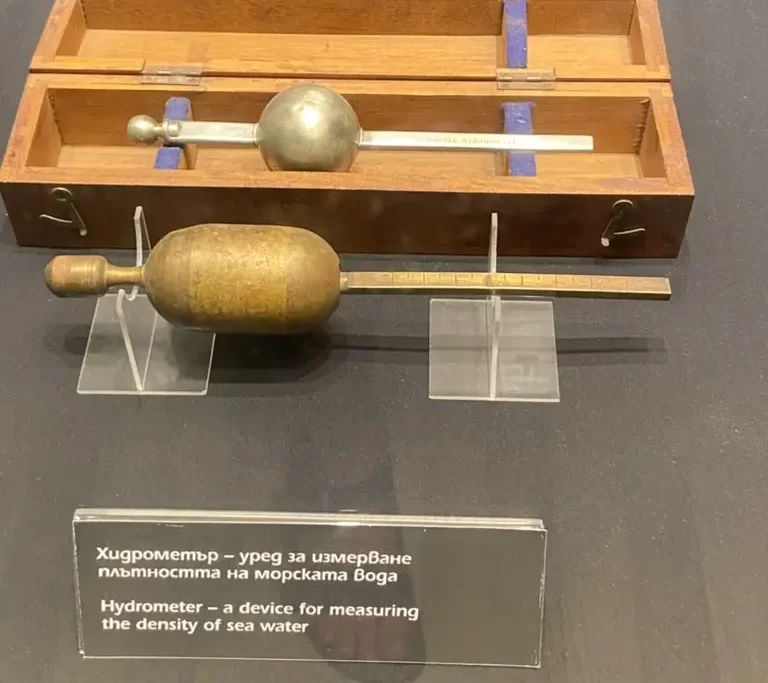
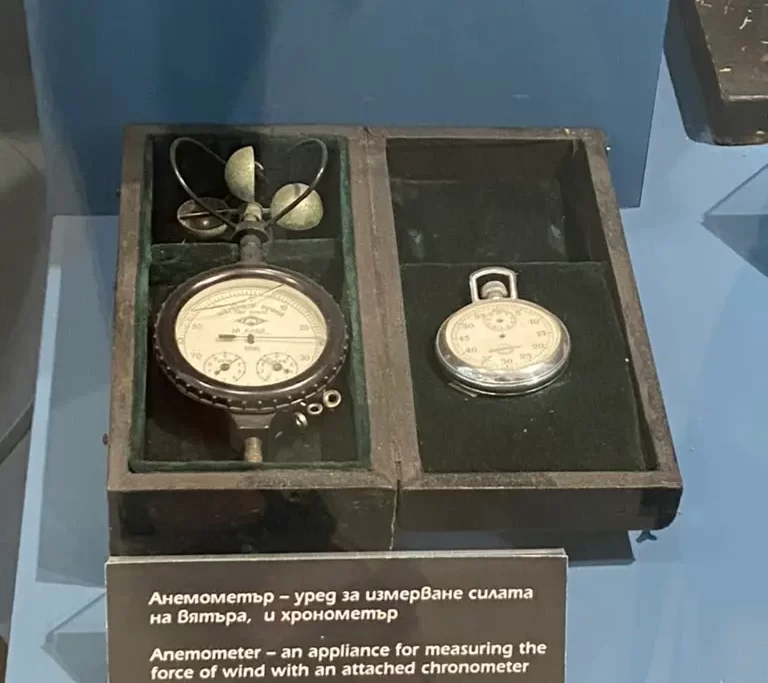
After Veliko Tarnovo we drove to Varna, the port town on the Black Sea coast. Here we stayed for two days. We unfortunately missed the free walking tour, so we made up our own tour which was significantly inferior. On a whim we decided to visit the local maritime museum, which we both enjoyed tremendously.
I especially enjoyed inspecting all the vintage maritime measuring tools. I could imagine myself being a measuring tool maker in those times. Perhaps I will try to recreate some of these old tools some day for a YouTube video!
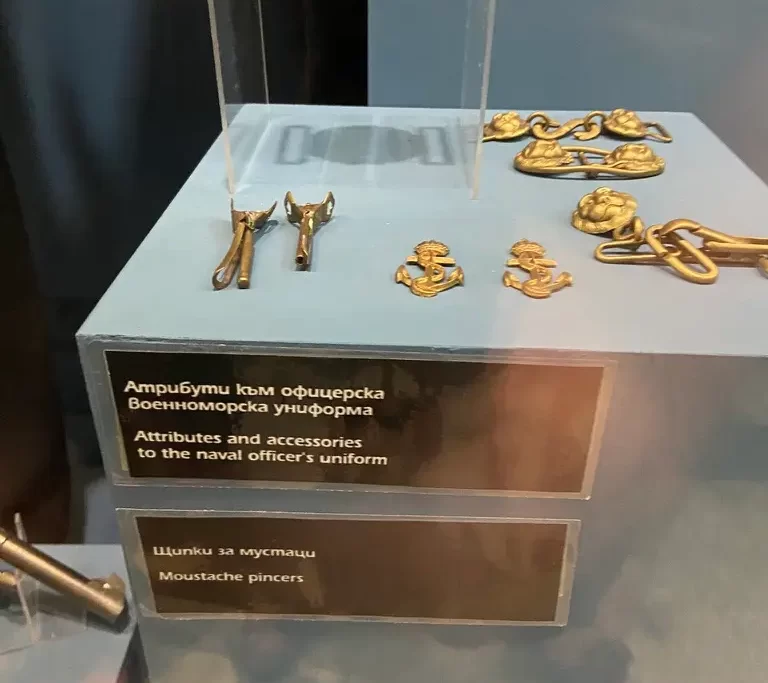
Moustache pincers?! What the hell are moustache pinchers?! I'm intrigued.
On our way out of Varna, we wanted to visit the city of Shumen to check out the massive socialist statue 'Founders of the Bulgarian State Monument'. Unfortunately, we were stopped half way up the mountain by a police officer in a Lada Niva. There was an illegally kept panther on the loose. He had escaped his basement and was said to be roaming these forests now (for over a week already apparently... they're not the best panther hunters in Bulgaria...). So we turned around and made our way to Kazanluk instead.
Kazanluk & Koprivshtitsa
In Kazanluk, we stayed at a campsite next to the Koprinka reservoir. Kazanluk is a place we've been to before. Last year, we finished our 4-day hike of the Stara Planina here. The town is famous for its yearly rose festival (which we've never visited) and their Tracian tombs (also never visited). What we did visit last year was the impressive Buzludzha monument (the socialist UFO building on the top of a mountain) during the annual Buzludzha monument festival. On our hike we also passed the historically relevant Shipka-pass (an important battle during Russo-Ottoman war that helped the liberation of Bulgaria).
From our campsite next to the water, we had a great view of both the Skipka-pass and the Buzludzha monument.
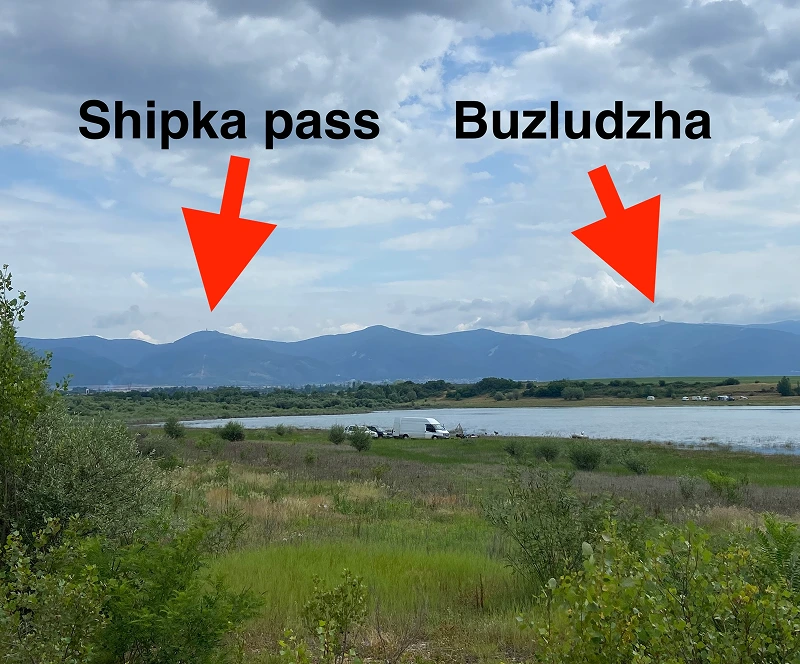
Our final stop before returning to Sofia was the Koprivshtitsa. This village is famous for its National Revival architecture and its was a breeding ground for many important figures of the resistance against the Ottoman empire. It was by far one of the most beautiful towns with traditional architecture that we visited in Bulgaria.
We didn't take any photos of the village though. I'd like to put the blame on Alisha for this. Alisha is a Dutch girl that we got to know during our Bulgarian language course. By the weirdest stroke of fortune we happened to run into her in this tiny village 2 hours away from Sofia. She was visiting with her partner, her son, and her dad. We had a lovely stroll through the town together, catching up and having coffee. It was a great final chapter of our travels through Northern Bulgaria.
Then we returned to Sofia to fill up our car with half of the stuff from our storage unit and we embarked on our journey to the Netherlands.
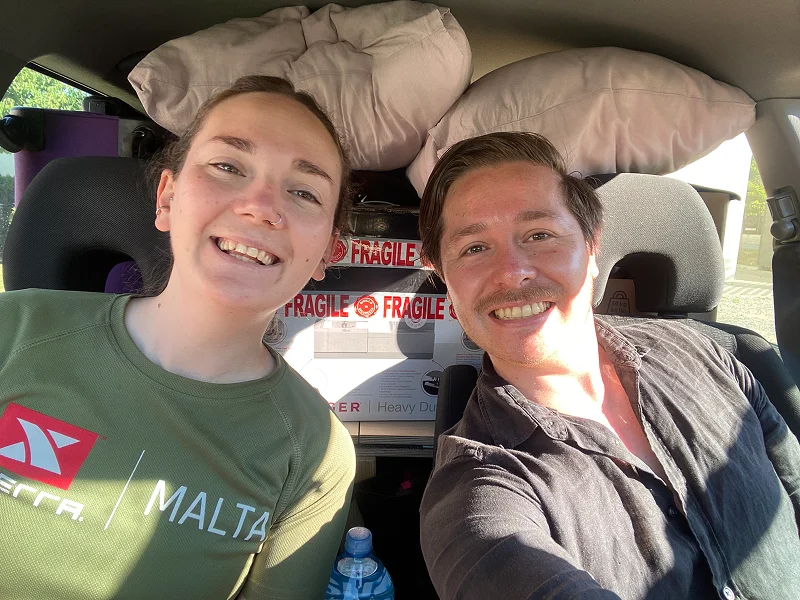
With a bit more tan, and a car full of stuff, we're ready to drive to the Netherlands!
We're both very excited to return in September to explore Southern Bulgaria. The lower autumn temperatures will suit us better and we've already learned a lot of important practical lessons about car camping that we'll be able to implement.
But before our South Bulgaria expedition, we'll explore Wales and the South of England in August. Being homeless and jobless isn't all that bad :)